The platform, act by act
BoroughLets brings it into one place, from the first search to the day they move in. Here is each part of that, in the order a case actually happens.
From registration to the shortlist
The daily map
Every morning the catalogue is rebuilt and each London borough is scored on how many homes fall within Local Housing Allowance. Step between LHA, plus five per cent and plus ten per cent and watch the map change.
Registration in under a minute
A council reference, the family name, and how to reach them. The case stays with whoever creates it, and can be handed to another caseworker at any time.
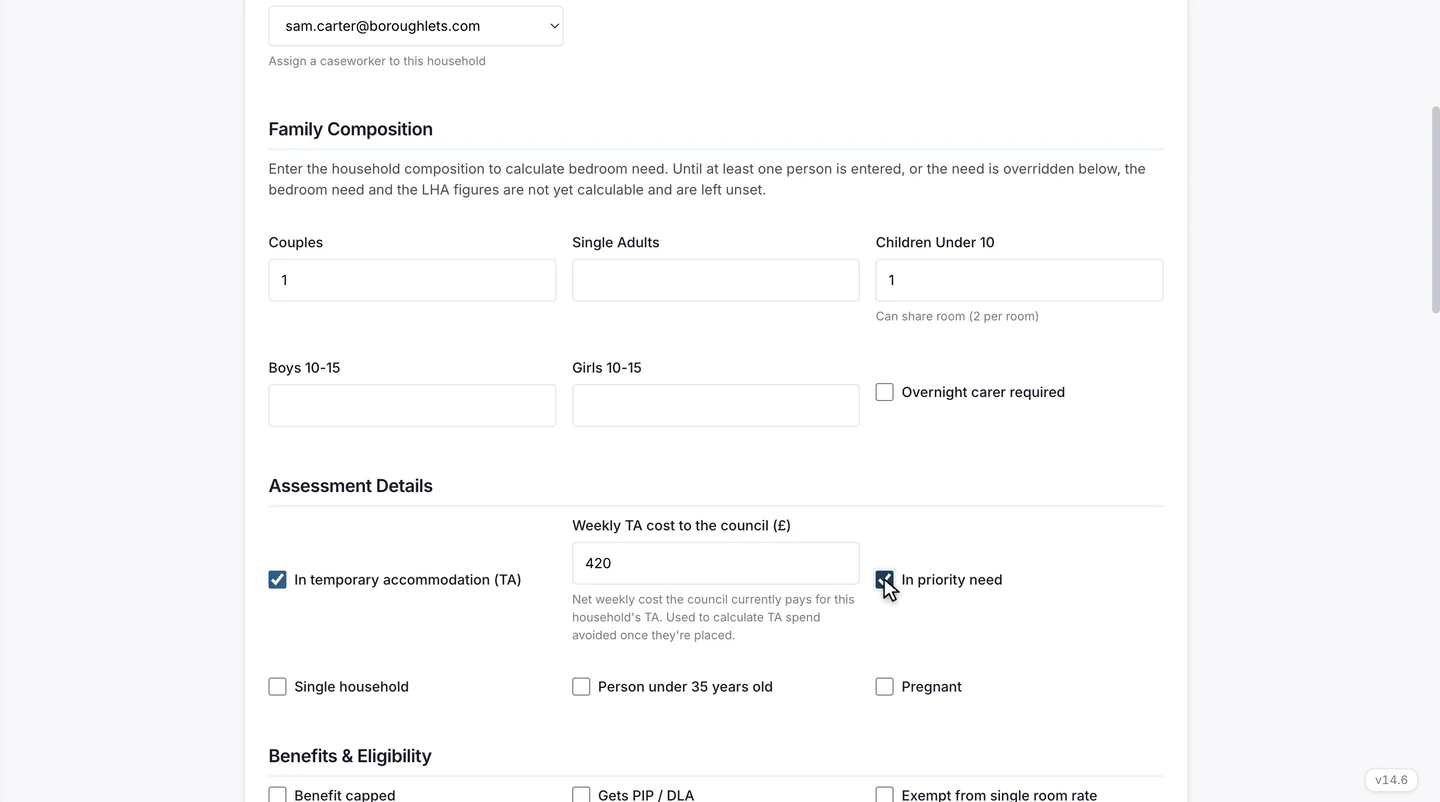
Affordability worked out for you
BoroughLets calculates bedroom need and Local Housing Allowance from the household's composition and home borough. Mark them as in temporary accommodation and it records what the stay is costing the council.
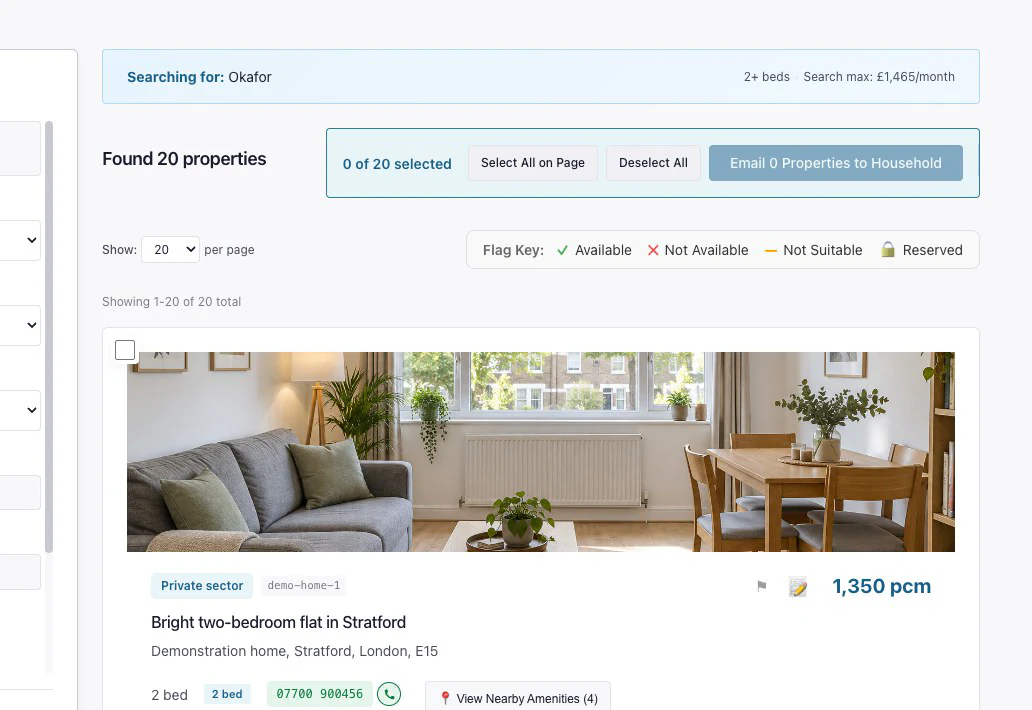
Search from the record
Search opens with her bedroom need and her maximum rent already set, and private sector listings come back within her budget. Open any home for the photographs and the full description without leaving the system.
A home, not just a property
Check nearby schools and healthcare, with walking and driving times, before arranging a viewing.
The shortlist
Pick the homes that fit, add a personal note, and send it straight to her inbox. The team can see what was sent, when it went out, and whether she has opened it.
Every conversation on the record
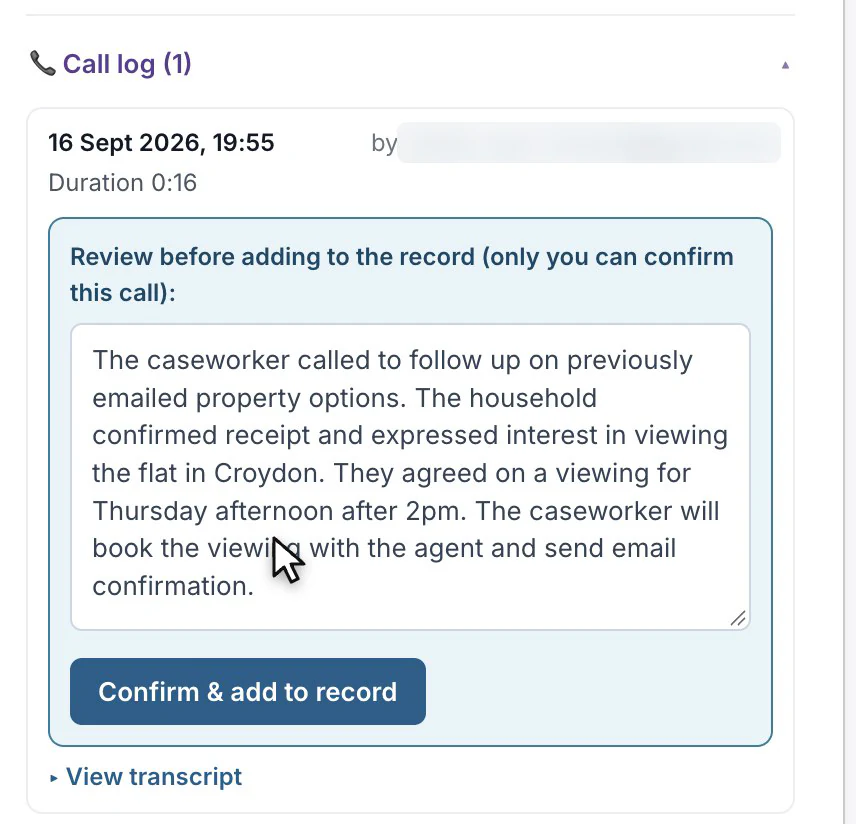
Call a family straight from their record, in the browser, on the council's own number. When you hang up, BoroughLets transcribes the call and drafts a summary.
Read it, correct anything that is not quite right, and confirm. The confirmed version cannot be altered afterwards, and the original draft is preserved beside it. Managers can review every confirmed call in one place.
This is not a setting that can be turned off. It is how the feature is built.
From shortlist to keys in hand
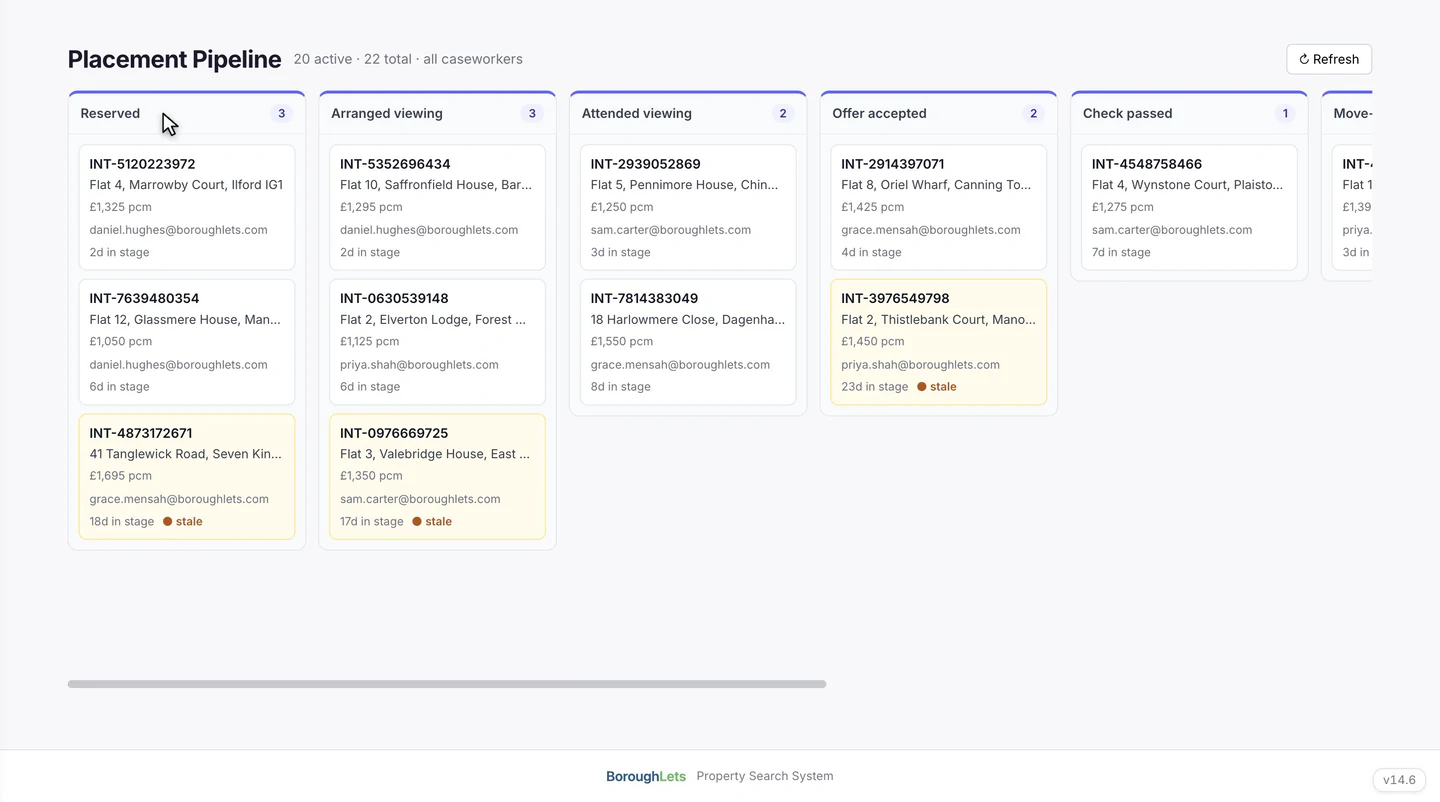
Reserve a home and the whole team can see it is spoken for, so two caseworkers never chase the same property.
Every step to the keys is tracked: the viewing, the offer, the checks, and the move. The board shows every placement the service holds, and anything that has stalled carries a marker.
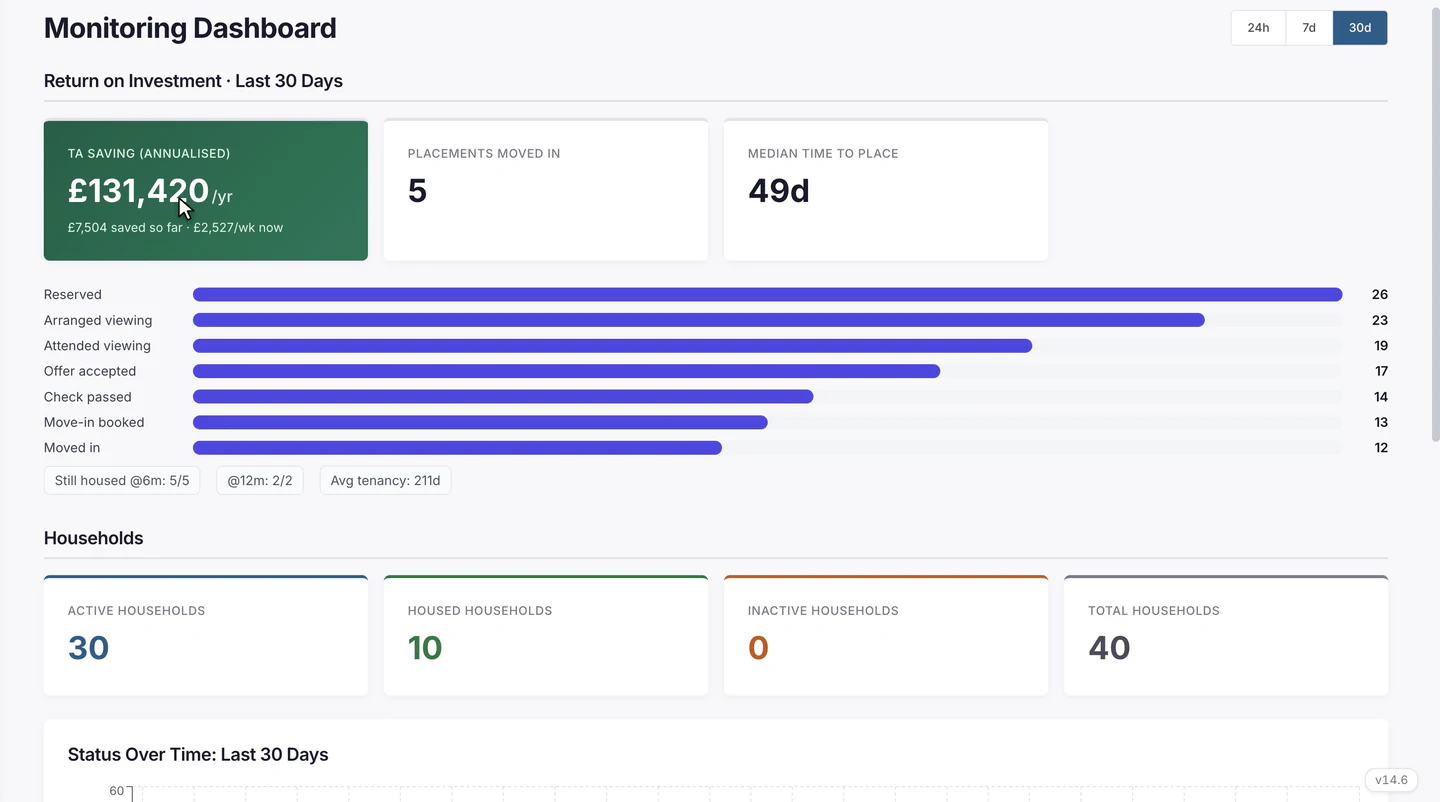
When a family moves in, BoroughLets records the temporary accommodation spend the council no longer pays.
The difference, in numbers
Temporary accommodation spend avoided, counted from the day a family moves in. How quickly families are placed, from registration to move in. Whether tenancies last, at six months and at twelve.
Every call is recorded and auditable, for the managers who need to see it.
Your whole caseload, from day one
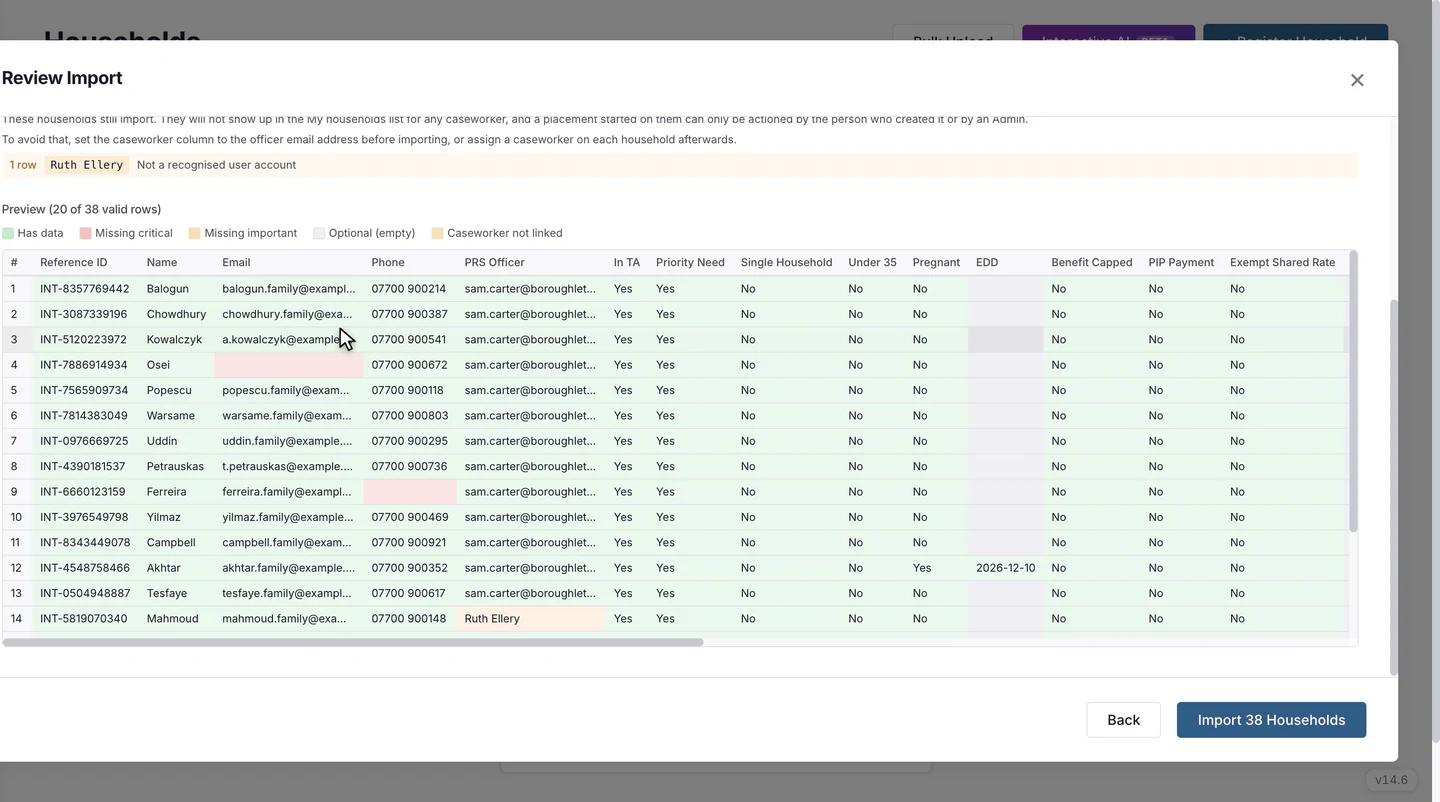
Bring your existing caseload across in one upload. The preview colours every row: what is complete, what is missing something critical, and what needs a decision. Nothing is saved until you say so, and the whole import can be rolled back.
New applicants can be registered just by describing them, in text or by voice. The details are read back for you to check before the record is created.
What BoroughLets is not
Worth saying plainly, because it saves everyone a meeting.
It is not a housing management or allocations system, and it does not replace one.
It does not make statutory decisions, and it does not assess or rank applicants.
It does not advertise properties to the public. There is no public access to any data.
It does not sign tenancies or handle payments.
BoroughLets. Built for councils. Made for families.
Tell us about your caseload and we will show you the platform against your own borough's Local Housing Allowance rates. A first demo takes 30 minutes, online, with nothing to prepare.