

Move families out of temporary accommodation sooner.
BoroughLets finds the private rented homes a household can afford on Local Housing Allowance, sends the shortlist, and tracks every placement to the keys. Every week saved is a week your temporary accommodation budget stops paying for.
Hosted in the UK. Piloting with a London borough from October 2026.
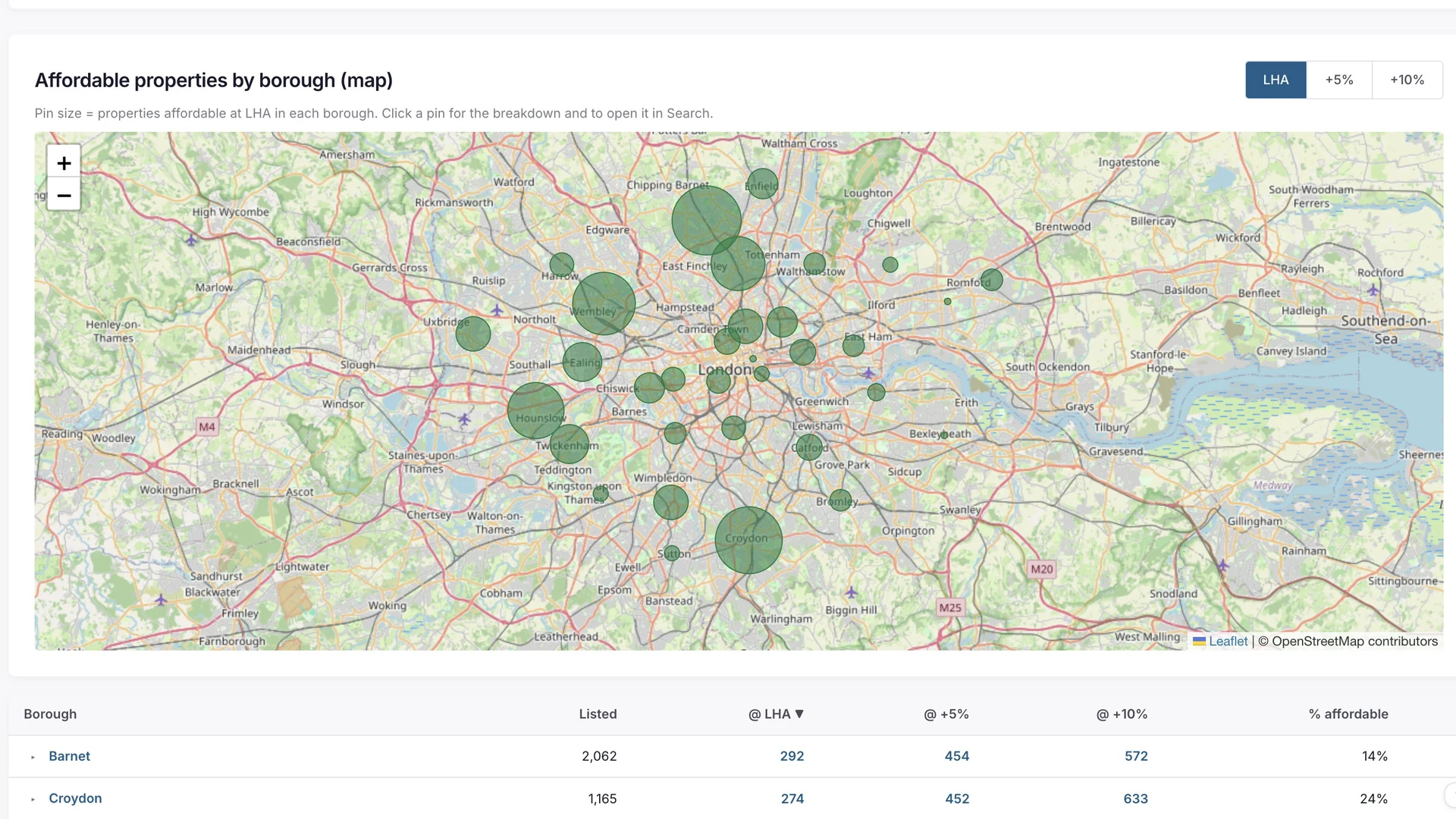
Recorded in a demonstration environment. Every household shown is fictional and every figure is illustrative.
Every week a family spends in temporary accommodation is a week they are not yet home.
Sources: London Councils, 30 September and 17 December 2025. Household counts are government statistics to June 2025.
Finding a family a private let means searching site by site, checking every rent against Local Housing Allowance, and chasing agents by phone. Every day that takes is a day of the figures above.
BoroughLets brings it into one place, from the first search to the day they move in.
The business case builds itself
Every placement is counted the day it happens, so the saving is a report you can send upward rather than a number somebody has to assemble.
The saving is the weekly temporary accommodation cost recorded for the household, less the full rent of the home they move to, counted from the day they move in. Time to place is tracked across the whole caseload. Every tenancy is recorded at six and twelve months, so sustainment is measured rather than assumed.
Your own figures fill this from the first placement.
What a week is worth in your borough
Two numbers you already know, and one to test.
Illustrative, and a one-off saving on today's caseload: households, times weeks sooner, times your weekly net cost, with example figures until you change them. The dashboard above counts the real saving from the first placement, net of the rent of the home each family moves to.
Find, engage, place
One case in a morning, then the three moments that decide how quickly a family moves. Recorded on a demonstration environment with fictional households and illustrative figures; the platform page has the rest, in the order a case happens.
- Minute 1Register the family
A reference, a name and how to reach them. Bedroom need and the Local Housing Allowance rate are worked out as you type.
- Minute 3Search the major sites at once
One search of the major listing sites at their rate, in one list, with the team's flags (available, not suitable, reserved) beside each home.
- Minute 6Shortlist in their inbox
Three homes and a personal note, sent from the record and tracked when it is opened.
- Minute 20Call, and the notes write themselves
Recorded, transcribed and drafted for you to read, correct and confirm.
- Minute 25Reserved, and on the board
Marked as spoken for, so nobody else offers it, and every step from here to move in tracked in one place.
One case, one morning: a worked example from the demonstration environment, with fictional households. Timings are illustrative and assume the family answers first time.
Find
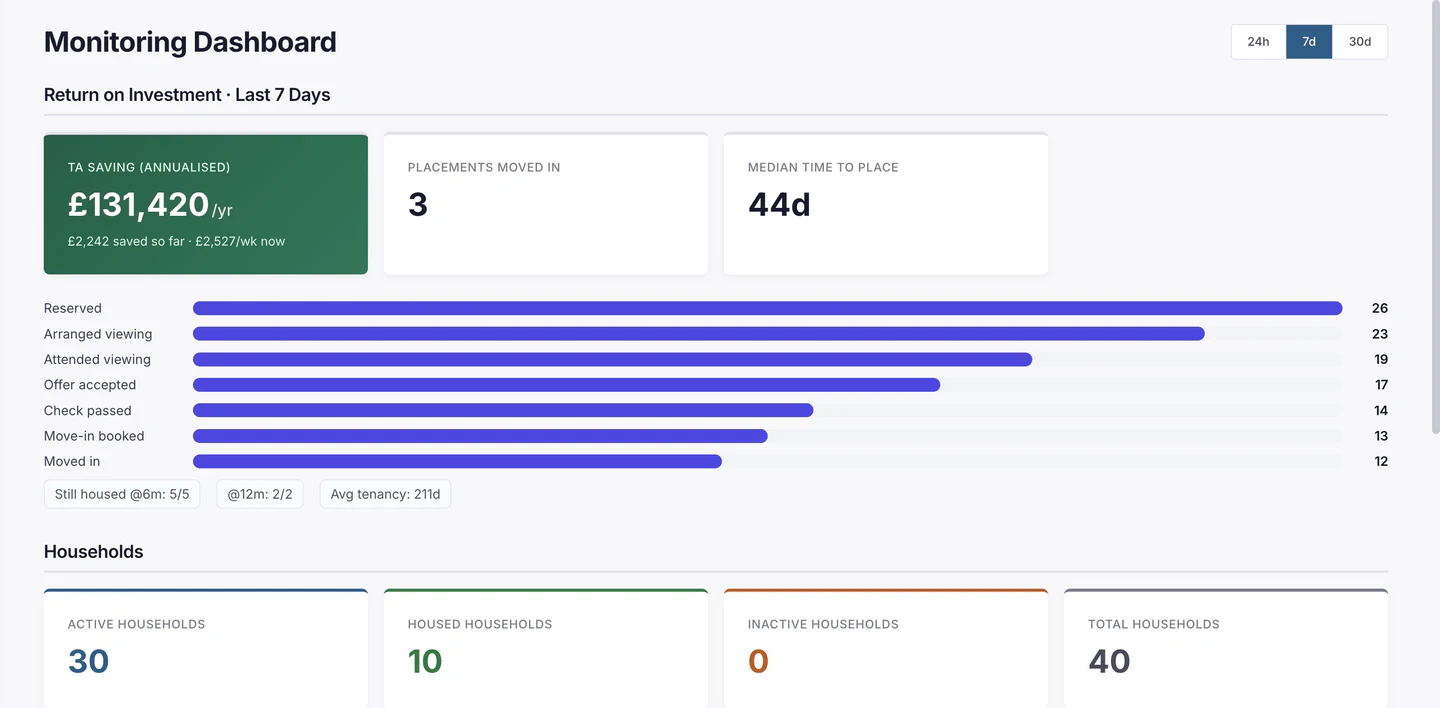
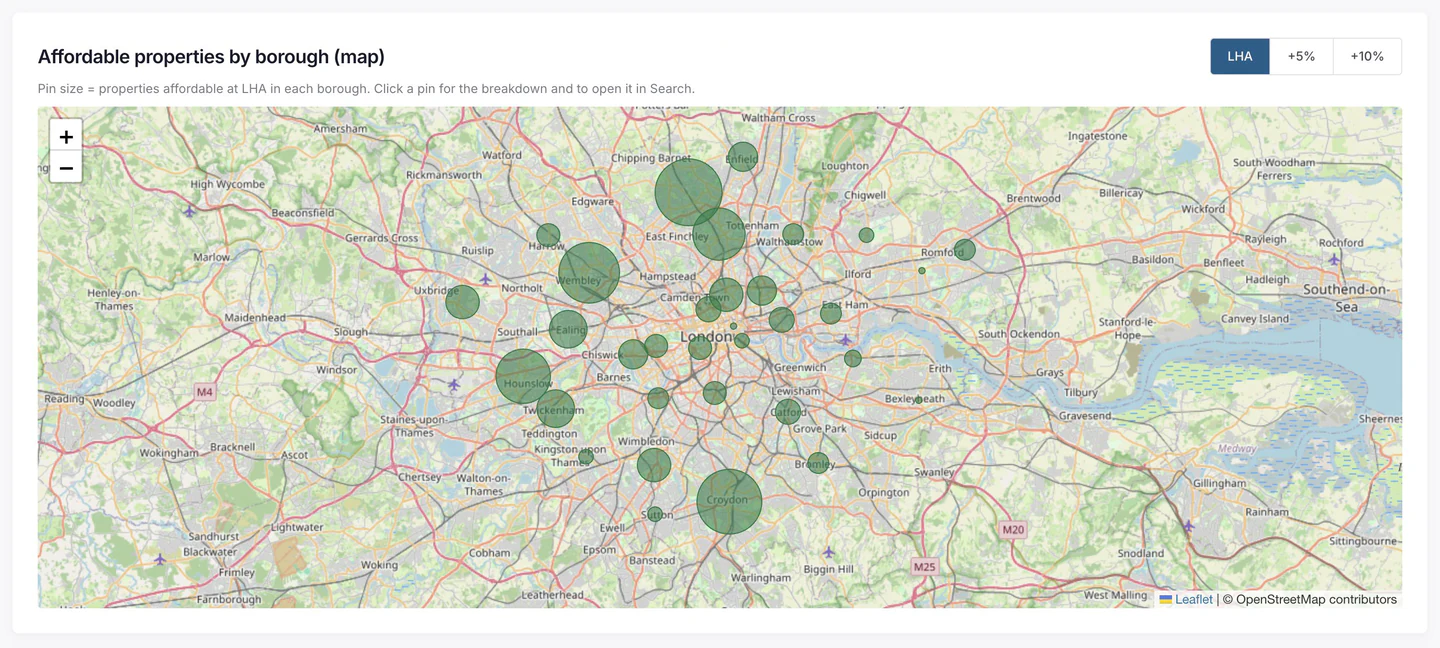
Every morning, BoroughLets maps the private lets across London that a family on Local Housing Allowance can afford, borough by borough.
As you describe the family, BoroughLets works out their bedroom need and their Local Housing Allowance. Mark them as in temporary accommodation, and it records what their stay is costing the council.
Engage
Pick the homes that fit, add a personal note, and the shortlist goes straight to the family. It is tracked on their record, so the team can see when it was sent and whether it has been opened.
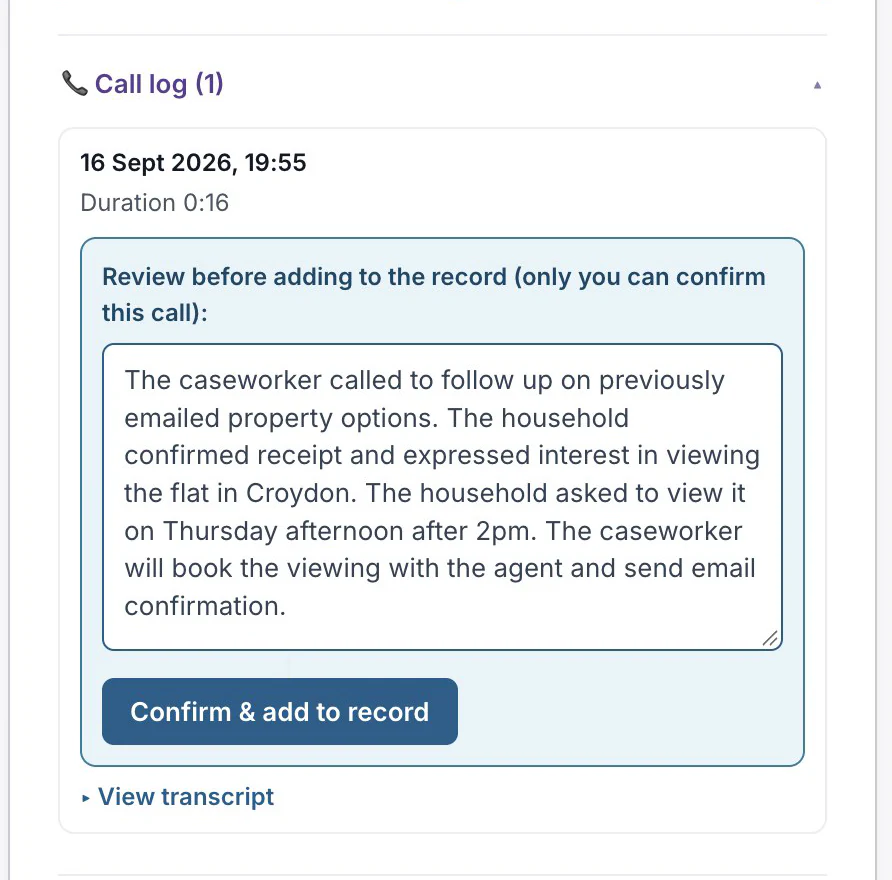
Need to speak to a family? Call them from their record, on the council's own number. The call is recorded, and the caseworker tells the family so at the start. When you hang up, BoroughLets transcribes it and drafts a summary.
A drafted summary has to be reviewed and confirmed by the caseworker who made the call. Once confirmed, the summary is kept as it was signed off, with the original draft alongside it, so what the caseworker approved is what the record shows.
Place
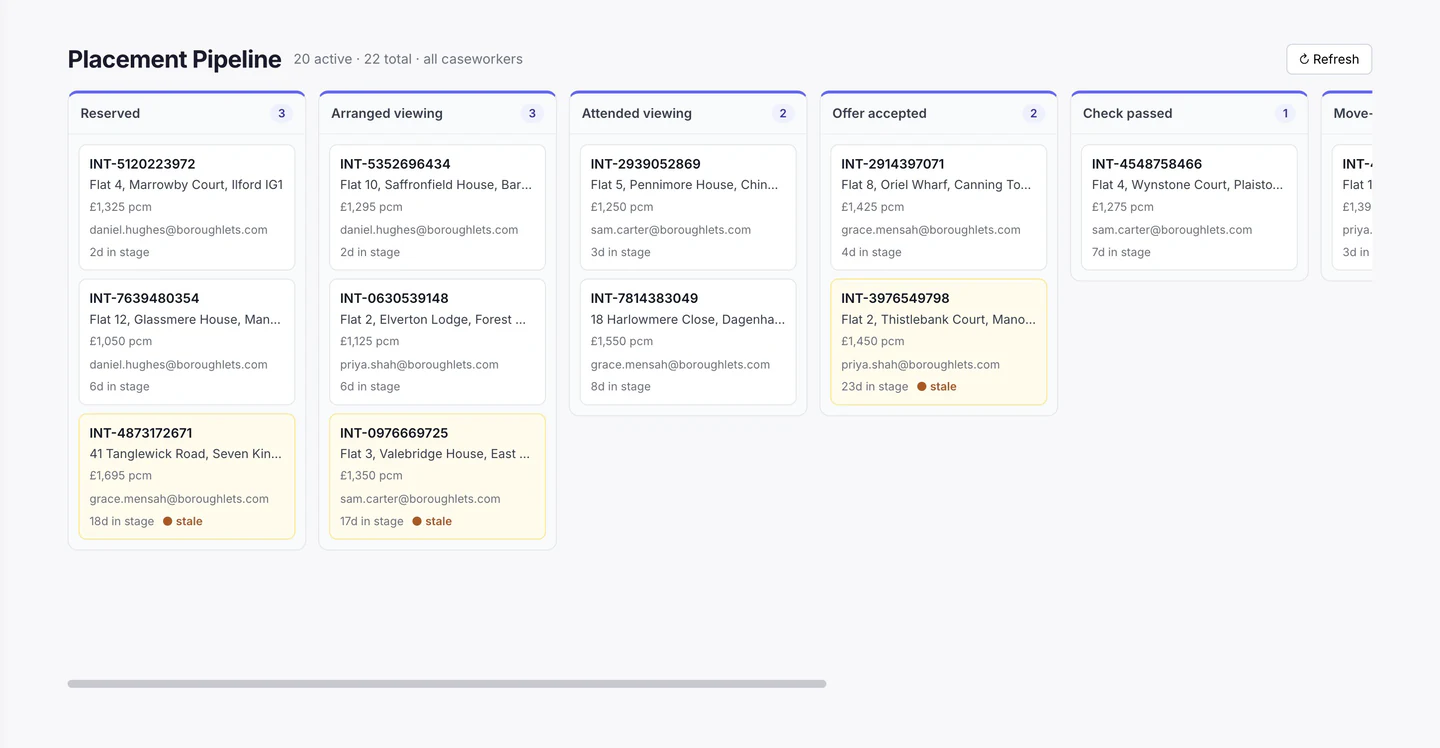
When the family chooses a home, reserve it, so the whole team can see it is spoken for. Every step to the keys is tracked: the viewing, the offer, the checks, and the move.
The board shows every placement at a glance, and anything that stalls stands out.
Sourcing from the private rented sector: four jobs done differently
| The job | Today | With BoroughLets |
|---|---|---|
| Search | Site by site, one at a time, each rent checked against the rate by hand. | One search across the major listing sites at Local Housing Allowance, plus five and plus ten per cent. |
| Affordability | Worked out by hand, household by household. | Bedroom need and the LHA rate calculated from the family's composition and home borough. |
| Calls | Notes typed up afterwards, when there is time. | Transcribed, drafted, and confirmed by the caseworker who made the call. |
| Reporting | Assembled for the quarterly meeting. | Counted the day a family moves in. |
An hour in week one, a spreadsheet in week two
Six weeks, and most of what we need from you happens in the first two.
Week one. Accounts, roles, your Local Housing Allowance rates, and the baseline the six week review is measured against: your current time to place and weekly temporary accommodation cost. About an hour of your administrator's time.
Week two. Your existing caseload comes across in one upload, checked row by row before anything is saved.
Week three. Live casework. Caseworkers search, shortlist and call from the record.
If you leave. Every record exported in an open format, and deletion confirmed in writing.
Your information governance colleagues can start now
Ask for the security and governance pack: the data protection impact assessment summary, the information sharing agreement template, and how the AI is constrained, in writing, before anyone books a demo.
AI that drafts. People who decide.
The platform is a decision support tool for trained caseworkers. It does not make automated decisions about people.
A person always signs off
No AI output reaches a record without a named caseworker confirming it, and the original draft is kept.
Affordability you can explain
Bedroom need and Local Housing Allowance come from published rates and documented rules, not from a model's guess.
Nobody is scored or ranked
AI is not used to assess, score or rank applicants. It helps with searching and with writing things up.
Questions councils ask
Where does the property data come from?
BoroughLets gathers publicly listed private rented properties from the major listing sites, checks each one against Local Housing Allowance, and rebuilds the catalogue every morning. Coverage today is the 33 London boroughs. Listings expire automatically after 90 days, so stale properties fall out on their own.
Does it replace our housing management system?
No. BoroughLets sits alongside it. It does the private rented search, the household affordability, the contact with the family, and the placement tracking. It is not an allocations system and it does not make statutory decisions.
Who can see the data?
Only named accounts your administrator has created. There is no self registration and no public access to any data. Every user signs in with multi factor authentication, holds a defined role. Placements, imports and credential reveals are written to an audit trail the platform can only add to; the security page sets out exactly what it covers.
Where is the data held?
In the United Kingdom, on Amazon Web Services in the London region. Each council's household and casework data is held in its own environment, not shared with any other council; the catalogue of public listings is shared.
How is AI used, and what are the limits?
AI turns a plain English search into filters, and drafts a summary after a call. It never decides anything about a person, and no draft enters a record until the caseworker who made the call reviews and confirms it.
How long does it take to get started?
A first demo takes 30 minutes. From there we plan a pilot as six weeks, with live casework from the third week.
Five screens, up close
From a demonstration environment, with fictional households and illustrative figures. Select any to look closer; the platform page has the full set.
Built for councils. Made for families.
Thirty minutes, online, on your own borough's Local Housing Allowance rates. Nothing to install and nothing to prepare.
- Your borough, mapped. How many private lets in your area a family can afford at Local Housing Allowance.
- A household, start to shortlist. Registered from scratch, matched, and a shortlist sent, in the time the demo takes.
- The AI, and its limits. A call summarised, then held at the confirm gate until a caseworker signs it off.
- The figures your director asks for. Spend avoided, time to place, and whether tenancies last.